How Much Do Bulk Custom T-Shirts Cost for Businesses?
When businesses search for bulk custom t-shirt pricing, they’re usually looking for one clear answer: What will this cost me per shirt?
Top-ranking pages consistently break pricing down into a few core variables. The total cost of your order is not random; it’s based on specific production factors that directly affect setup time, materials, and labor.
Here are the key elements that influence bulk pricing.
Quantity Ordered
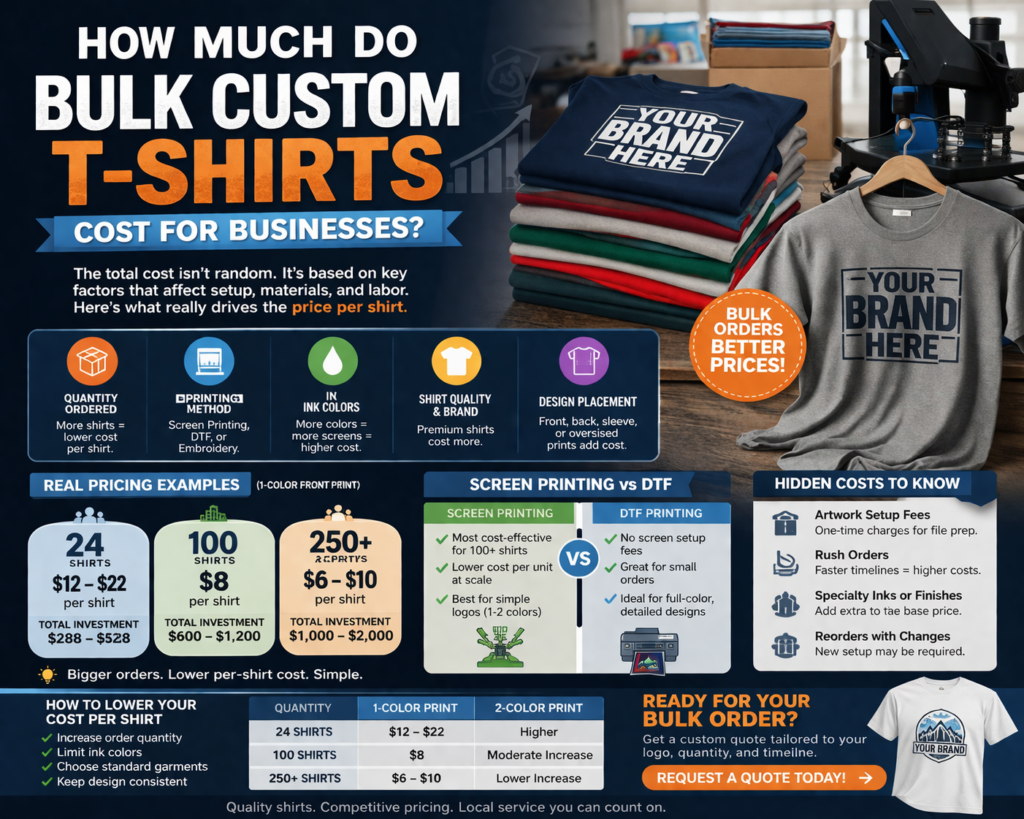
Quantity is the biggest pricing factor.
Most leading print providers structure pricing in tiers. As the number of shirts increases, the cost per shirt decreases. This happens because setup costs, like screen preparation and press setup, are spread across more units.
For example:
- Small orders (around 24 shirts) typically have a higher per-shirt cost.
- Mid-size orders (100+ shirts) benefit from noticeable price drops.
- Large orders (250+ shirts) often unlock the lowest per-unit rates.
This tiered pricing model appears consistently across first-page results and reflects how production efficiency improves with scale.
Printing Method (Screen Printing vs. DTF vs. Embroidery)
The decoration method directly impacts the cost structure.
- Screen printing is generally the most cost-effective for larger bulk orders because setup is done once and reused across all garments.
- Direct-to-Film (DTF) printing usually works better for smaller quantities or highly detailed, full-color designs.
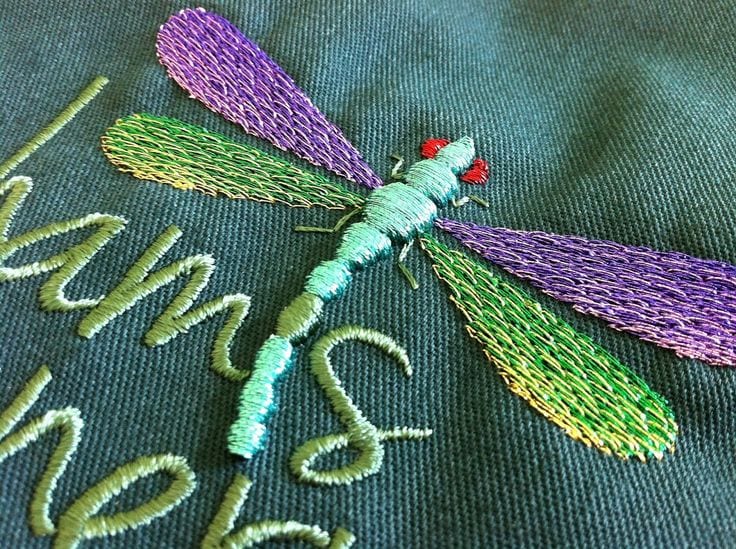
- Embroidery is priced differently, often based on stitch count and complexity and is commonly used for logos on polos, jackets, and uniforms.
Top-ranking pricing guides consistently separate costs by printing method because each process has different setup requirements and production speeds.
Number of Ink Colors in the Design
The more colors in your logo or design, the higher the production cost.
With screen printing, each color requires a separate screen setup. That means:
- A 1-color logo costs less than a 3-color logo.
- Additional colors increase both setup time and material use.
Many high-ranking pages highlight this factor because it’s one of the most misunderstood pricing variables for businesses placing their first bulk order.
Shirt Quality & Brand
Not all blank shirts cost the same.
Basic cotton tees are typically the most budget-friendly option. Premium garments — such as higher thread count cotton, blends, moisture-wicking fabrics, or name-brand apparel — increase the base garment cost before printing is added.
Most top-ranking cost pages clarify that pricing depends not only on printing but also on the quality tier of the shirt selected.
Design Placement (Front, Back, Sleeve)
Print location also affects pricing.
A single front logo costs less than:
- Front + back print
- Sleeve print
- Oversized or specialty placement
Each additional placement adds production time and materials. Leading competitors include this detail because it significantly affects final quotes, especially for business uniforms and event shirts.
Real Pricing Examples for Businesses (24, 100, 250+ Shirts)
One pattern across top-ranking pricing pages is the use of estimated price ranges based on quantity. However, many of them stop at general numbers without showing what those costs look like for real business scenarios.
Below are practical examples that reflect how bulk pricing typically scales as order size increases.
Example 1 – 24 Shirts (Small Team or Startup)
A smaller order — such as outfitting a startup team, restaurant staff, or event crew — usually falls into the 24–36 shirt range.
For a standard cotton t-shirt with a 1-color front print:
- Estimated range: $12–$22 per shirt
- Total investment: $288–$528
Why the higher per-unit cost?
Setup expenses (like screen preparation) are distributed across fewer garments, so each shirt carries a larger portion of that initial production cost.
If additional print locations or extra ink colors are added, the price per shirt increases accordingly.
Example 2 – 100 Shirts (Growing Company or Mid-Size Order)
This quantity is common for expanding businesses, school groups, or promotional campaigns.
For 100 standard shirts with a 1-color front design:
- Estimated range: $8 per shirt
- Total investment: $600–$1,200
At this level, the setup cost is spread more efficiently, significantly lowering the price per unit compared to smaller orders. This pricing tier is where many businesses begin to see strong cost efficiency.
Adding multiple colors or additional print placements would adjust the final per-shirt cost upward.
Example 3 – 250+ Shirts (Large Crew, Event, or Corporate Order)
For construction crews, company-wide uniform rollouts, trade shows, or large events, bulk orders often exceed 250 shirts.
For 250 shirts with a 1-color front print:
- Estimated range: $6–$10 per shirt
- Total investment: $1,000–$2,000
At this scale, production becomes highly efficient. The initial setup cost has minimal impact per unit, making screen printing particularly cost-effective for larger runs.
As seen across leading pricing pages, this is typically where businesses achieve the lowest per-shirt rates — provided the design remains consistent and print complexity stays moderate.
Screen Printing vs. DTF: Which Is More Cost-Effective for Bulk Orders?
Top-ranking pricing pages consistently separate costs by printing method because production economics differ significantly between processes. Choosing the right method can dramatically impact your per-shirt cost.
When Screen Printing Is More Cost-Effective
Screen printing is generally the most economical option for medium to large bulk orders.
Because the setup (creating screens for each ink color) is completed once and reused across all garments, the cost per unit drops significantly as quantity increases.
This is why most large-volume pricing examples across first-page results assume screen printing for orders of 100+ shirts.
For simple logos with one or two colors, screen printing typically delivers the lowest per-shirt cost at scale.
When DTF Makes Financial Sense
Direct-to-garment (DTF) printing does not require screen setup, which reduces upfront preparation time.
For small orders or designs with complex, full-color artwork, DTF can be more practical — even if the per-shirt price is higher than bulk screen printing.
Many competitors position DTF as a flexible solution for lower quantities or detailed graphics where screen setup would otherwise increase costs.
Cost Comparison Overview
In general:
- Small orders → DTF may be competitive due to no setup fees
- Medium to large orders → Screen printing usually offers lower per-unit pricing
- Premium garments or logo-focused apparel → Embroidery pricing follows a different structure based on stitch count
This breakdown aligns with how top-ranking pages explain method-based pricing differences while helping businesses choose the most cost-efficient production option.
Hidden Costs Businesses Often Miss
Most top-ranking pricing pages outline base costs but rarely explain additional factors that can affect the final quote. Understanding these variables helps businesses avoid surprises.
Artwork Setup Fees
If a logo file requires adjustment, vector conversion, or preparation for printing, there may be a one-time setup charge.
Screen printing, in particular, requires proper file preparation before production begins.
Rush Orders
Expedited production timelines can increase costs. Tight deadlines may require schedule adjustments, additional labor, or
priority handling.
Rush pricing is often not highlighted prominently on competitor pages but can meaningfully impact total order cost.
Specialty Inks or Finishes
Metallic inks, puff prints, oversized prints, or specialty finishes add material and production complexity.
While basic pricing examples often assume standard ink, specialty options increase the per-shirt rate.
Reorders with Design Changes
Reorders using the same design typically remain cost-efficient. However, modifying artwork between runs may require new setup work, affecting pricing.
Clarifying these factors upfront ensures more accurate budgeting.
How to Lower Your Cost Per Shirt
Top-ranking pricing guides emphasize quantity discounts but rarely provide practical cost-saving strategies. Businesses can reduce per-unit pricing with simple adjustments.
Increase Order Quantity
Because setup costs are fixed, increasing quantity is the most effective way to lower cost per shirt.
Consolidating department orders or planning seasonal uniforms in one run can improve efficiency.
Limit Ink Colors
Reducing the number of print colors decreases setup complexity in screen printing, helping lower overall costs.
A simplified logo version for apparel can meaningfully reduce per-unit pricing.
Choose Standard Garments
Basic cotton shirts generally offer the lowest base cost.
Premium fabric upgrades increase pricing before decoration is added.
Keep Design Consistent Across the Order
Maintaining the same artwork, placement, and garment style avoids additional setup changes that can increase costs.
Consistency supports both branding and cost control.
Bulk T-Shirt Pricing for Denver & Lakewood Businesses
Most first-page results are national providers. However, pricing can vary based on location and production model.
Why Local Production Can Impact Cost
Working with a local production partner in Lakewood or the Denver area can reduce shipping expenses and simplify communication throughout the order process.
Local coordination may also help businesses avoid rush shipping fees or long turnaround times associated with large online-only providers.
Local Print Shop vs. Large Online Platforms
National platforms often automate pricing through online calculators. While convenient, these tools may not account for custom adjustments or personalized service.
A local production partner can provide tailored quotes based on exact design, garment selection, and timeline needs.
This distinction is rarely emphasized in top-ranking pages but directly impacts decision-making for businesses ordering in specific regions.
Quick Cost Estimate Table (At-a-Glance)
Most high-ranking pricing pages include simplified cost tables for easy scanning. A clear summary helps businesses quickly estimate budgets.
| Quantity | 1-Color Print (Estimated) | 2-Color Print (Estimated) |
| 24 Shirts | $12–$22 per shirt | Higher due to added setup |
| 100 Shirts | $8 per shirt | Moderate increase |
| 250+ Shirts | $6–$10 per shirt | Lower per-unit increase |
Exact pricing depends on garment selection, design complexity, and print method, but this structure reflects the tiered pricing model consistently seen across first-page competitors.
Final Thoughts: What Should Your Business Budget?
Based on common pricing tiers:
- Small teams (around 24 shirts) → Budget approximately $300–$700
- Mid-size orders (100 shirts) → Budget approximately $600–$1,200
- Large orders (250+ shirts) → Budget approximately $1,000–$2,000
Actual totals vary based on garment quality, ink colors, and print placement. Planning ahead and confirming design details early helps ensure accurate quotes and efficient production.
Get a Custom Quote for Your Bulk Order
If you’re planning a bulk t-shirt order for your business, team, or event, the most accurate way to determine cost is through a detailed quote based on:
- Quantity
- Garment type
- Design complexity
- Print method
- Timeline
At Choice Image, we provide transparent bulk pricing for businesses across Lakewood and Denver. If you’d like an exact quote based on your logo and quantity, request a custom estimate today.